Pixie Luck: Adding Whimsy to Your Creative Projects
Every designer knows the feeling: you're staring at a blank canvas, searching for that one element that will transform a good layout into something memorable. Sometimes, it's not a photograph or an illustration, but a typeface with enough character to tell a story on its own. That's the space Pixie Luck occupies. It's not just a serif font; it's a conversation starter, a mood-setter, and a distinct piece of design assets that brings a specific, playful energy to the table.
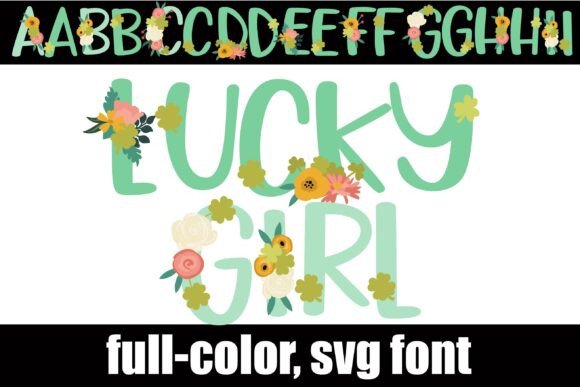
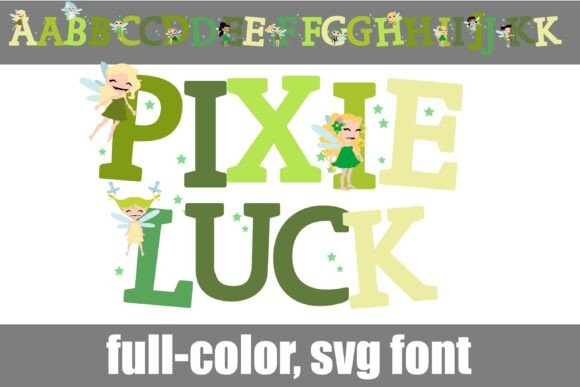
At its heart, Pixie Luck is a full-color SVG font. This means it's not your average black-and-white typeface. The uppercase letters are rendered in a vibrant, whimsical green, adorned with adorable, detailed pixies. Imagine a letter 'A' where a tiny pixie might be perched on the crossbar, or a 'B' where another is peeking out from the bowl. This isn't just a font; it's a miniature illustration for each letter. The lowercase letters and punctuation maintain the charming serif style but in a solid green, providing a perfect balance between the ornate uppercase and readable body text. For projects needing more variety, an alternate version accessible through your system's character map offers the entire alphabet in a spectrum of colors, giving you even more creative control.
Finding the Right Home for Pixie Luck
The bold personality of Pixie Luck means it isn't the right fit for every situation. You wouldn't use it for a legal contract or a technical manual. Its strength lies in applications where visual hierarchy and brand perception are driven by charm and imagination. Think of it as a specialty tool in your modern typography kit.
It shines in logo design for businesses that want to convey magic, creativity, or a child-like wonder—think boutique toy stores, fantasy-themed bakeries, or artisan craft brands. In packaging design, it can make a product on a shelf leap out, especially for items like specialty teas, whimsical stationery, or handmade cosmetics. For editorial design, consider it for chapter headings in a fantasy novel, a feature title in a craft magazine, or a pull quote that needs to feel enchanting.
Digital applications are equally strong. It's a natural for social media graphics promoting a storybook launch, a workshop, or a magical-themed event. It can be a stunning choice for the hero section of a web design for a children's entertainer or a fantasy author's website, setting the tone immediately. For personal projects, it's perfect for birthday invitations, scrapbook titles, or custom party decorations. And importantly, its compatibility with Silhouette Studio makes it a fantastic asset for crafters working with cutting machines for decals, labels, and vinyl projects.
Making It Work: Practical Guidance for Designers and Creators
Choosing a premium font like Pixie Luck is an investment, so evaluating its fit is crucial. Start by asking if the font's personality aligns with your project's core message. Does "whimsical" and "magical" describe the brand identity you're building? If yes, you're on the right track.
Next, consider font pairing. A font this distinctive needs a partner that complements without competing. A clean, geometric sans serif font for body text can provide excellent contrast and ensure readability, letting Pixie Luck's headings do the talking. Alternatively, a simple, neutral script font could work for subheadings if you're leaning into a fully handwritten, storybook aesthetic. The key is balance; let Pixie Luck be the star, supported by a calm, supporting cast.
Always review the full character set. Check for essential glyphs you might need, like numbers, punctuation, and common symbols. Test it at the size you intend to use it. While it's a display font meant for larger sizes, you still want to ensure the pixie details are clear and legible at your target scale, whether on a poster or a social media thumbnail.
Finally, understand the technical and licensing aspects. As a color font, it will render as a standard black font in software that doesn't support SVG color fonts. Always test it in your specific program. For commercial projects, verify the licensing terms allow for your intended use, whether it's for client work, merchandise, or digital products. A commercial font license typically covers most standard applications, but it's always best practice to confirm.
Beyond the Letters: The Impact of a Whimsical Typeface
Using a font like Pixie Luck does more than just spell out words. It influences how your audience feels. A whimsical serif can make a brand seem more approachable, friendly, and imaginative. It can trigger nostalgia and joy, which is powerful for brand identity in certain markets. In a crowded digital space, a unique typeface helps with recognition; people will remember the "font with the little pixies."
However, this comes with a responsibility to readability. Its ornate nature means it's best reserved for short, impactful text—titles, headers, and logos. Using it for long paragraphs would quickly become tiring for the reader. The goal is to use its charm strategically to draw the eye and set a mood, then hand off to a more neutral typeface for the detailed information.
Pixie Luck is a tool for specific jobs. It's not a workhorse font for body copy, but a specialist for adding a spark of magic. For the right project—a children's book cover, a fantasy-themed wedding invitation, a logo for a creative studio—it can be the perfect element that ties the entire visual story together, making your design not just seen, but felt.